
American Beauty Atlantic White Cedar Seeds
| Product | Price | |
|---|---|---|
| 1000 Seeds, AWCE_S-1000 | $120.00 | Out of stock |
Seeds-Plant Discoveries-New Crops-Ecological Enrichment Click Here!

| Product | Price | |
|---|---|---|
| 1000 Seeds, AWCE_S-1000 | $120.00 | Out of stock |

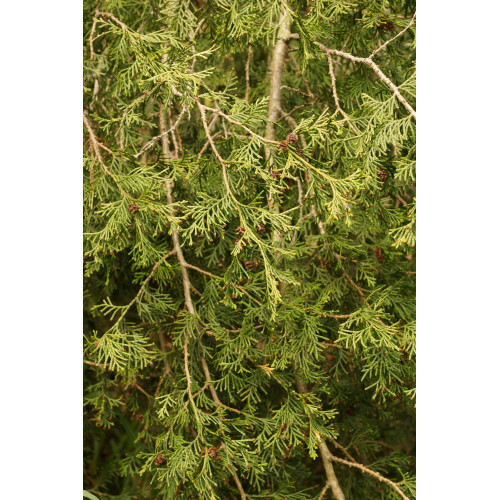
"American Beauty" Fast growing dry land northern seed strain of Chamaecyparis indigenous to the Eastern Coast of North America
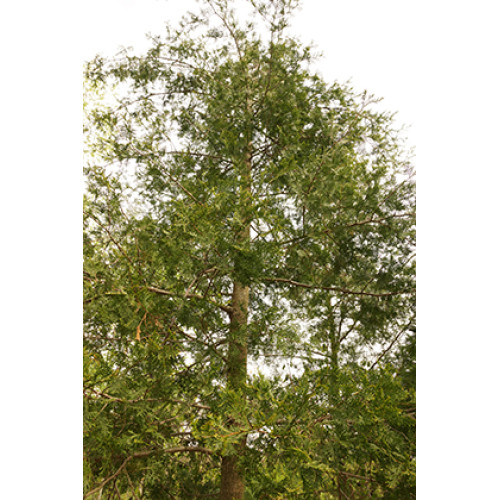
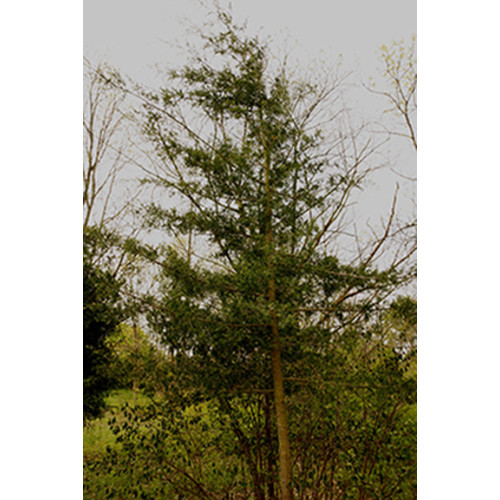
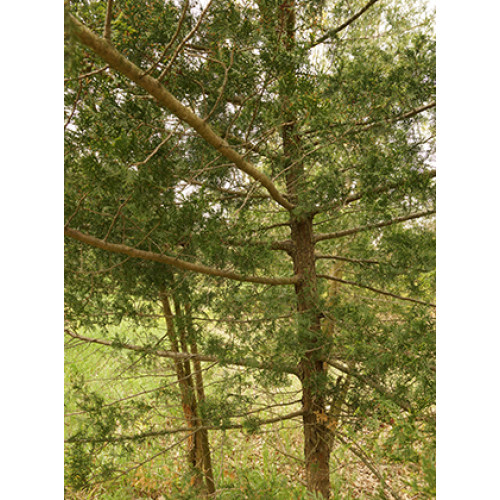
One of the rarest of evergreens and difficult to obtain seeds, I was fortunate to make a small planting of several trees grown from seed from a midwestern arboretum that had mature plants. I propagated them in trays in my polyhouses at first and then eventually grew them in the 'outback' to establish a local seed source. Surprisingly the seedlings grew vigorously in my non wetland soil. Over a twenty five year period the trees have set a good crops of cones and fully adapted to the weather and soils in southern Michigan.
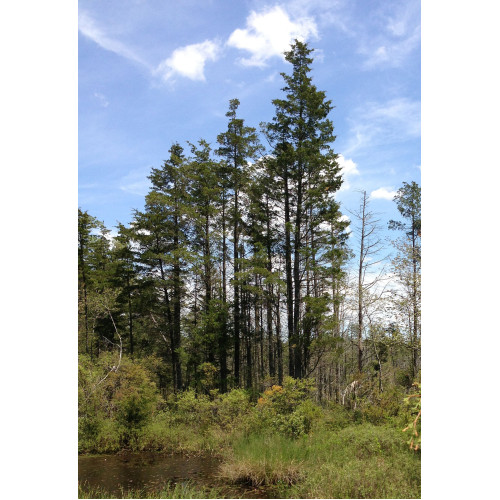
Normally a wetland tree this species of Chamaecyparis grows along the east coast and is know for its fine water and insect repellent wood. This species was used for outside decking, boat building and other uses similar to bald cypress. I have found it adaptable and easy to grow even in sandy dry soil. One of my customers was telling me his trees grew to 10 ft. in 3 years. His planting was done in a wet sandy area with a high water table. This is the ideal location for this species and in many ways is similar to the northern white cedar as far as adaptibility goes.
Height to 80 ft. with a large 3-4 ft. trunk. Easily hardy in zone 5 .No winter damage has been observed on the trees in southwestern Michigan. At minus 27F in the winter of 2018-19 and there was no winter burn. At this point white tail deer consume the foliage but the damage is limited and not every year. Many years there is no browsing.
"American Beauty" is a seed strain that represents the most northern portion of its range as well as selected for speed of growth in dry soil conditions. The seedlings with the most growth after two years were planted out initially over 25 years ago. Further selection should be done to find even more faster growing seed strains with a larger population in real life plantings. "American Beauty" seedlings have take a couple of minus 25F hits a few times and plenty of snow load too. They are extremely adaptable to southern Michigan and could likely be grown into Zone 4 easily.
To germinate the seeds: plant outside in fall lightly raking the seeds in the soil They are tiny so careful not to plant too deep. The seeds will germinate in the spring. A portion of the seeds will germinate the second spring as it is common with this species to be doubly dormant.
For the germination in your refrigerator, put the seeds in a lightly moist bag of sand, and peat and store near 33 F for 120 days and then plant outside or in a flat. As they sprout you can pluck them out and put them in pots. Seeds will stay fairly dormant in the refrigerator. One of my customers freezes his in a block of moist peat moss for 120 days and then plants. I am not sure how that is better but it appeared to work well for him. The seeds do not damp off easily so you usually get a high tree percentage. One of my customers created an outdoor seed bed totally enclosed by hardware cloth top to bottom to prevent mice from eating the seed.
Seed from the 2024 and 25 years. Currently in processing. Limited quantity.
| Plant Specs | |
| Genus & Species | Chamaecyparis thyoides |
| Seed Source | Illinois originally from cultivated stock and then grown in Michigan from seed. |
| Hardiness | minus 25 F or more |
| Height (ft) | 60 ft. or more |
| Width (ft) | 20-60 |
| Pollination Requirements | If you are going to plant them for eventual seed production I would plant several to insure cross pollination spacing at 10 ft. apart. |
| Soil | Wet is good. Dry is OK but slower growth is to be expected. Rich organic soil is ideal but tolerant of other soils that are not typical wetland conditions. |
| Climate | Zone 4ish-9. Probably not a western species but has never been tested as far as I know. The western Chamaecyparis are short lived usually in Michigan. |
| Ease of Cultivation | Easy to grow as any pine. Should be given the name sequoia of the east due to its past size and range. When I first did the plantings, I put them in an area that had the deepest topsoil at the base of a hill. This in itself was a good idea. Although not a wetland, the trees grew fine. At four years of age, the growth rate speeds up. Could easily be grown as an ornamental evergreen like arborvitae. The only selection that I have ever seen in cultivation is a teeny dwarf compact shrub form. The large tree types are missing only because no one has grown it commercially and put it on the map of useful evergreens. It is not that hard to grow. Extracting seed and cleaning it is a slow process as the seeds adhere to the cones and difficult to clean fully. Seeds are very expensive to buy on the market usually. |