


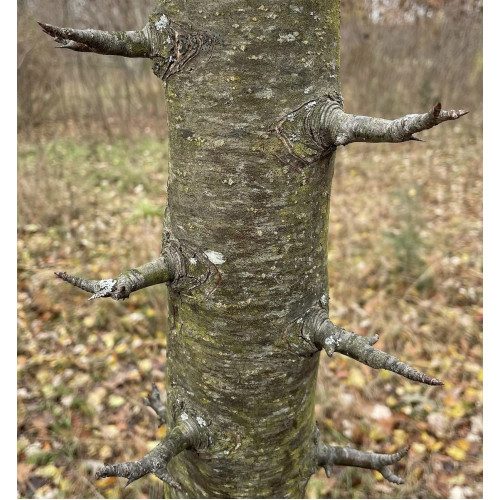
Florida Pie Pear Seeds &"Pie-in-the-Sky"
| Product | Price | |
|---|---|---|
| 1000 Seeds+SC, FLPP_S-1000+SC | $220.00 | Out of stock |
Seeds-Plant Discoveries-New Crops-Ecological Enrichment Click Here!

| Product | Price | |
|---|---|---|
| 1000 Seeds+SC, FLPP_S-1000+SC | $220.00 | Out of stock |

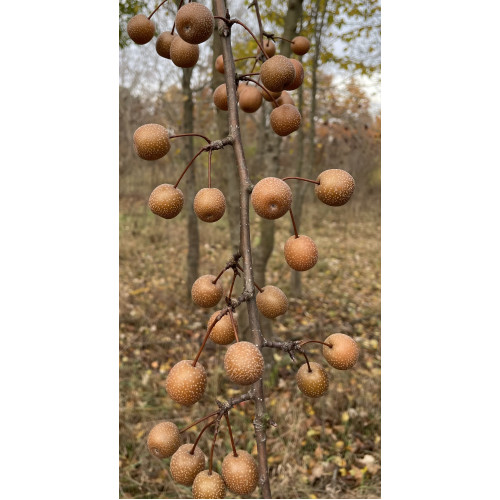
Florida pie pear or Florida sand pear is a species complex of an Asian pear that has become naturalized over parts of Florida where it has become a niche wild food that is a harvestable crop used for pies. Some consider it a forgotten or neglected fruit. Others view it as just a wild form of pear similar to other wild fruits that have established themselves in abandoned fields and herbicide damaged land. This tart pear benefits from a series of frosts where the astringency is lost as it becomes sweet and raisin like. Its use for pies became popular when no other fruit was ripening late in the year. The use of sugar and cooking mellows the flavor like a raisin pie but with pears. The pears are cooked and pushed through a colander and then blended to make a rich pear like flavor. As small as these pears are, the flavor is remarkably good. Ripens in November in Michigan. I collect them in December usually. The pears stay on the trees very late until they are often consumed by cedar waxwings if you do not get there in time. The seeds are consumed in July by squirrels. Like all pear trees, they produce fruit on spurs similar to the Asian pear.
We received our seed from an woman who used to live in Michigan and lived on a farm in northern Florida. She loved to collect the fruits every year and make a pie pear during the holidays. She sent me the fruit which sent a beautiful aroma throughout the post office according to the postal clerk who handed me the rather leaky package wrapped in plastic. When I first planted the seedlings on my farm, I noticed winter was rough on them and several died during a cold winter. I mean they are from Florida after all. But many survived and to my surprise they were quite vigorous free of damaging disease and insects.
This species needs to be identified more closely as it appears to be a separate species. The Florida pie pear is a valuable genetic resource. There is likely some hybridization within it but in general the flowers, mature bark, leaves and spur type fruiting is very similar to the Asian pear. Fruit size runs from 1/2 inch to one inch in size.The fruit is always born in clusters and easy to pick large quantities. It ripens late in November. Like the winter pear, it is best to pick it hard and then let it blet indoors. After bletting it can be made into a paste which is used for pie or a spread if you combine it with sugar, cinnamon and cloves.
There are no known insects or diseases that affects the trees. Very immune to fire blight.
Variety: "Pie-in-the-Sky" Selected from 20 individuals Pie-in-the-Sky delivers both larger fruit and the normal heavy yields common with this seed selection. Fruits are produced in clusters and ripen late into November. This is the ideal time to harvest them after they have frosted several times. Similar to an Asian pear in tree structure, Pie-in-the-Sky has excellent vigor as a young tree compared to the other seedlings of its class. There is no fireblight and the fruit has no insect or disease presence ever. This selection still has that raisin like flavor of a good wild pie pear similar to the fruits that were sent to me many years ago.
To germinate the seed: Add seeds to a lightly moist media and distribute evenly in a zip lock bag. Store in your refrigerator for 90-12 days. Some seeds will begin sprouting in the bag in the fridge. Take those out and plant in pots. After 90 days, put the bag at room temperature and you can pick out the sprouted seeds and put in pots or plant the seeds in a good garden soil covering the seeds with 1/8 inch of soil. Before storing in refrigerator keep the seeds in the moist media for a day or two to let the seeds imbibe in water.
| Plant Specs | |
| Genus & Species | Pyrus pyrifolia x communis and complex hybrid |
| Seed Source | Florida Panhandle region |
| Hardiness | -25 F |
| Height (ft) | 20-40 ft. Strong upright pyramidal growth |
| Width (ft) | 20-30ft. |
| Pollination Requirements | Self fertile. |
| Soil | Appears to be tolerant of every soil type possible. Can easily growi on rock or sand. Possible a good rootstock pear for very tough sites. Alkaline soil seems fine as well. Despite being from Florida, the soils here are very good with this pear. |
| Climate | Zone 5-10 |
| Ease of Cultivation | Super tough pear needs a bit of processing in the kitchen but worth growing just for the floral raisin like flavor which can be used for jelly as well. Has not spread by seed at our farm. The seed is consumed by our healthy population of birds and squirrels. Nice fall color on some plants. This combined with the beautiful large white flowers make it a nice ornamental tree. Thorny upright tree with thick spurs and super hard wood makes this tree and it massive yields a perfect pear tree to grow for bletting like medlars. |
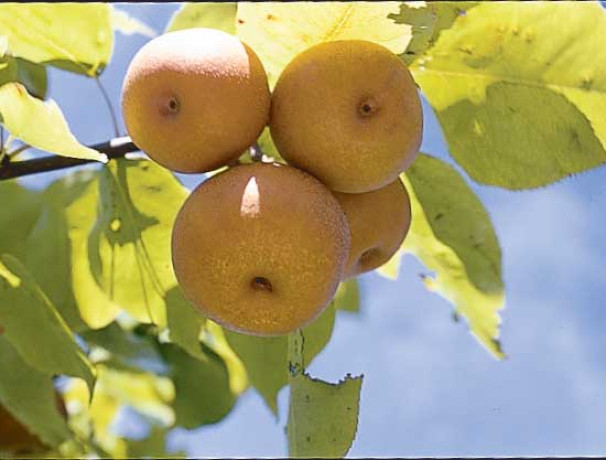
The Ecos pears were developed from a single tree found in central Michigan grow..
$240.00
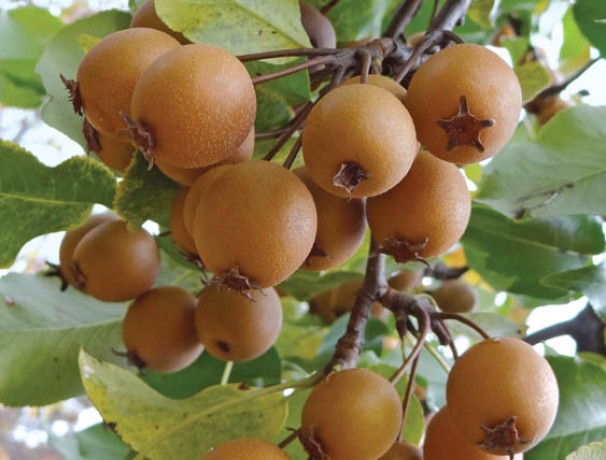
The Family Park pear trees was a local group of cultivated pears at the edge of a park I use t..
$240.00