

Angelica-tree Seeds
| Product | Price | |
|---|---|---|
| 500 seeds, JATR_S-500 | $90.00 | Out of stock |
Seeds-Plant Discoveries-New Crops-Ecological Enrichment Click Here!

| Product | Price | |
|---|---|---|
| 500 seeds, JATR_S-500 | $90.00 | Out of stock |

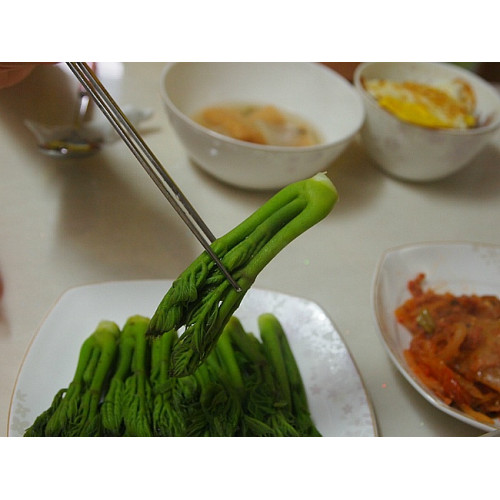
This species is known as tara-no-ki in Japan where the young shoots are harvested and then tempura fried. It is also used in China and Korea. Harvest the shoots young (6 inches or less) to avoid the prickles on the petioles and peel the stems if any appear to have developed. One of the few edible foliage trees. Pruning is done to keep the plant in a more vegetative state which eliminates flowering. Usually the plant is topped which forces the side branching. This improves the yield dramatically and makes the shoots easier to blanch and more succulent. If you do not do this the plants will tend to grow tall to 20 ft. tall, flower and fruit. The fruit is not edible. Seeds are tiny and often are blanks.
Our Korean strain is a smaller medium sized plant that has reached 15 ft. tall after 20 plus years. The larger trunks will begin to break down after 20 years and new sprouts will take its place. This species does produce stolons and spreads like shumac with shallow roots. This allows for you to develop a colony where the vegetable part of it can be increased in production. After 30 years of growing this plant I have discovered it does not spread via seed but does have an extensive shallow root system. For a normal backyard situation, this might be too much and it needs a contined pot or polybag. There are currently numerous ornamental selections of this plant, but this is the wild form meant specifically for vegetable production.
The availability of seed is very rare because my plants produce few viable seeds. Over 30 years of flowering and only once was there seeds to propagate from and the amount of seedlings from those seeds in a well cared for propagation tray was low. Other selections in the nursery trade are fully sterile so it is a common condition. Please check the National Plant Board website for your state before ordering if this concerns you and those around you. Yet even the sterile plants are not allowed in many states. The rules are usually one size fits all with no exceptions.
To germinate the seed: The seed is a lot like raspberry in that it needs a period of time in contact with soil to break down the seed coat to allow sprouting. After that it is a normal cold stratification of 90-120 days at 34-38F to sprout. It is difficult to do in the refrigerator as it sprouts like crazy in cold storage the second year so I would put in a flat and lightly cover with sand and peat barely covering the seed. Use a good peat mix in the flat. Leave the flat protected outside and in an area free of rodents or screen it. Surprising the seedlings will take two years before they are large enough to transplant out. I purposefully float out as many blanks as possible.
| Plant Specs | |
| Genus & Species | Aralia elata |
| Seed Source | Michigan |
| Hardiness | minus 25F |
| Height (ft) | 15 |
| Width (ft) | 5 |
| Pollination Requirements | Self fertile. Produces a small blue fruit in big clusters like elderberry.Not particularly fertile and produces few seeds for the amount of fruit. |
| Soil | Thrives in disturbed soils and other areas where the soil has been exposed. Seeds are distributed by birds. |
| Climate | Zone 4ish to zone 9 |
| Ease of Cultivation | Very easy to grow. Yields would have to be managed by pruning and allowing lots of side branching similar to elderberry as the tree tends to grow upright and runner a little bit like shumac. Harvest the young shoots and blanching appears to be the method most often used to make this woody plant not just edible but delicious. |