

Chinese Quince Seeds
| Product | Price | |
|---|---|---|
| 200 Seeds-CHQU_S-200 | $92.00 |
|
Seeds-Plant Discoveries-New Crops-Ecological Enrichment Click Here!

| Product | Price | |
|---|---|---|
| 200 Seeds-CHQU_S-200 | $92.00 |
|
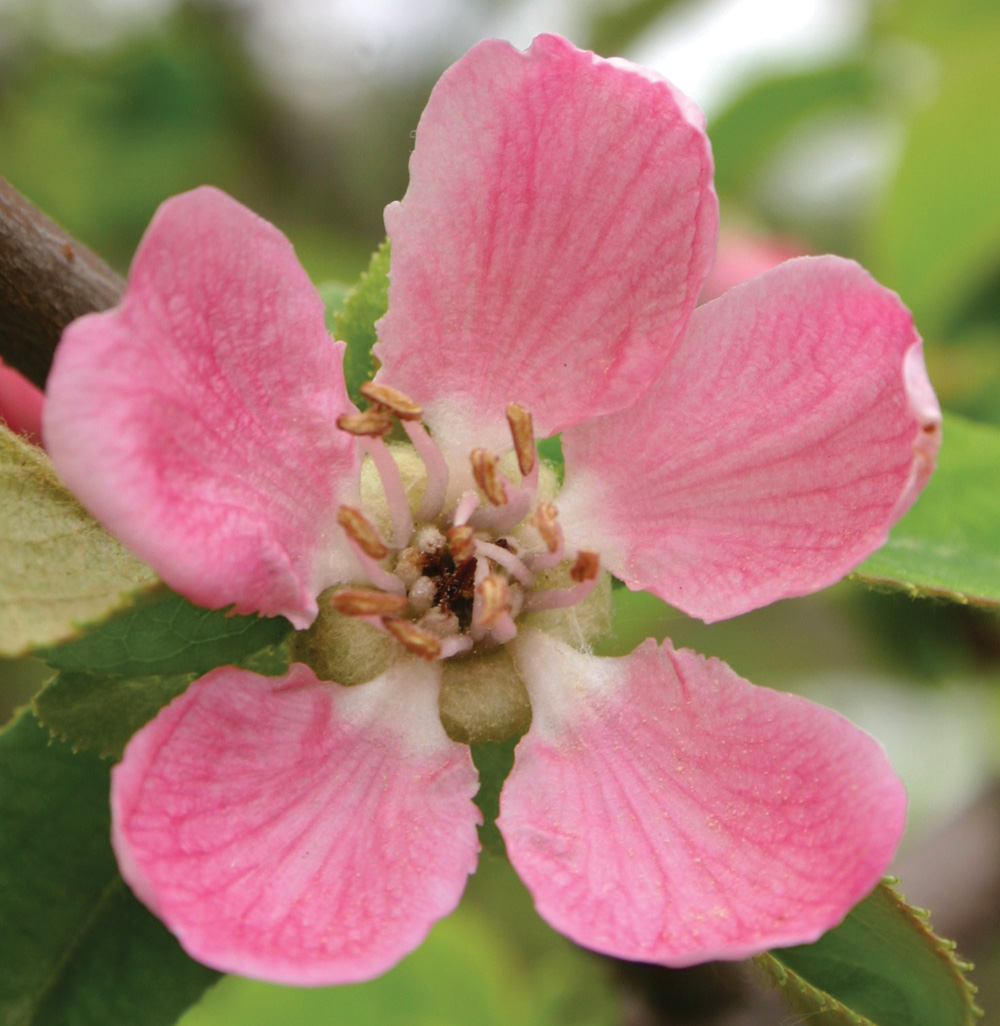

A robust seed selection from a Zone 5 tree with good fireblight resistance. Heavy fruit production.
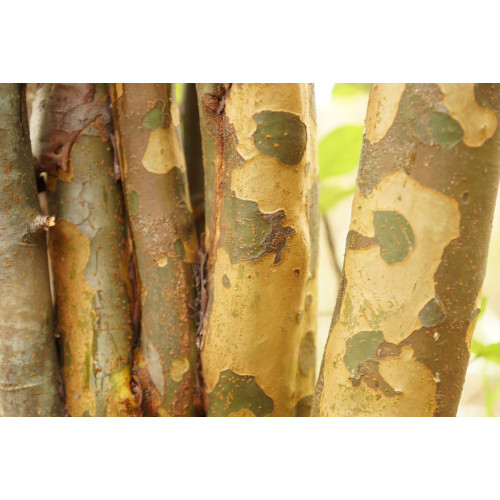
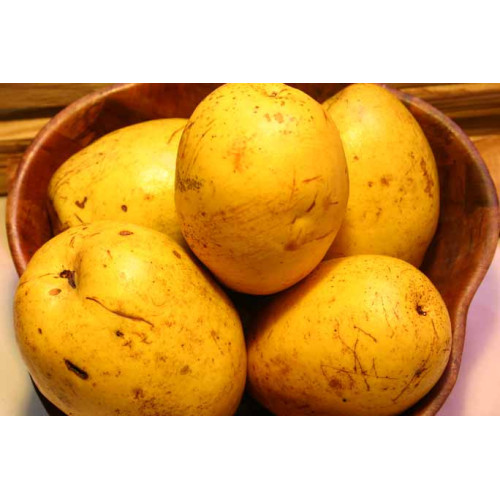
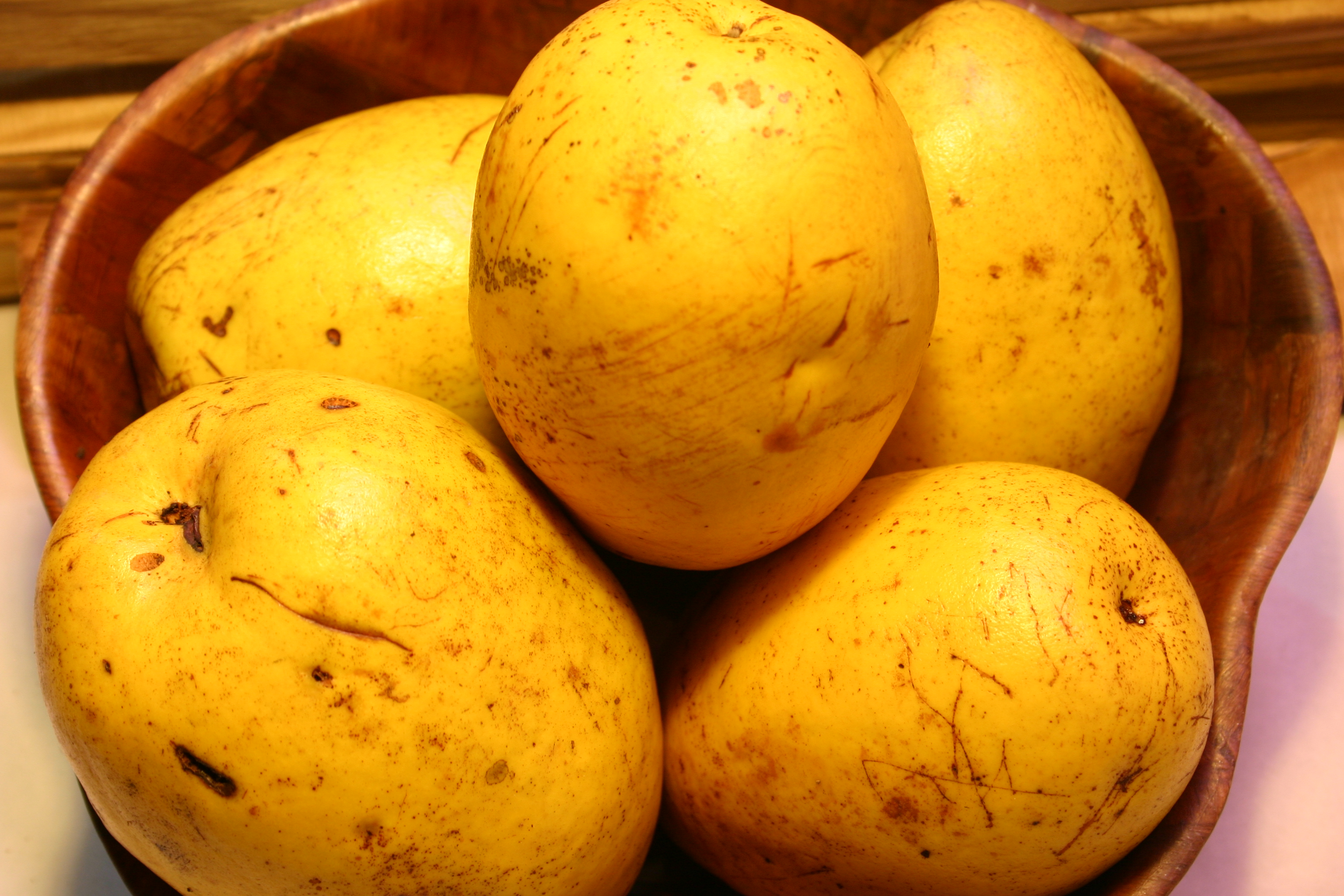
This species is well known for its mosaic puzzle-like bark and large fruits. It is more commonly found in southern landscapes than in Michigan. When I first grew the plants from seed, I started with 4 plants and soon found that fireblight was incredibly tough on them. There was one left from this planting. Another planting which had over 25 plants in a long row under the shellbark hickories faired better. Extremely cold winters along with a stretch of over 100F activated fireblight. These normal environmental changes winnowed them to three plants one of which is a good producer of large bright yellow fruit. Chinese quince offers a challenge to develop uses for compared to the common quince which is well known. Chinese quince has a mild flavor on its own and is incredibly hard when fully ripe. It is usually candied and boiled in sugar and then canned for use later. It mixes well with other fruits and has a high pectin level. This fruit is very versatile once processed. In the United States it was produced as an ornamental plant. Since then you rarely see it for sale, it was fireblight that limited its widespread use. This Ecos seed source has proven to be the best under high heat and humidity and is the only source available for Zone 5. More selections are needed to improve fruit yields within this species. Self fertile but two plants are best for highest yields.
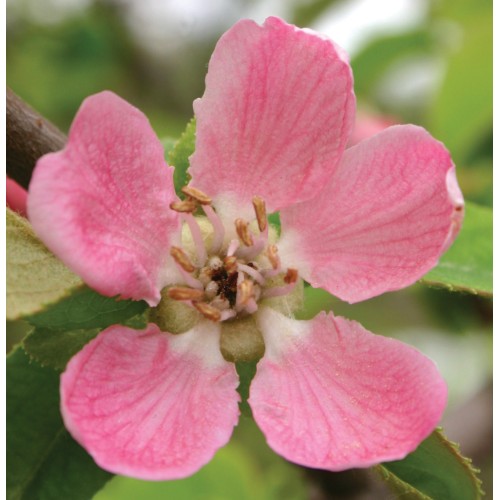
Fruit production begins in 5 to 8 years from seed. The trees at that point are roughly 10-15 feet tall. Trees produce large quantities of fruit after 10 years. Do not The plants are very tolerant to poor soils and drought. The large pink flowers attract many butterflies and bees.
To Germinate from Seed; Treat Like Apple Seeds- Place the seed in a zip lock bag mixed with a slightly moist Canadian peat moss. Seeds can then be placed in the refrigerator for 90-120 days at 33-39F. After refrigeration put at root temperature. Seeds will immediately sprout. Some sprouting may occur in the refrigerator as well. A clear viscous gel encapsulates the seeds. I removed the gel and the seeds can be planted as is outside in the fall if you wish. Seedlings are easy to field produce as well just by planting 1/4 to 1/2 inch deep in the fall. Trees reach up to 2 feet tall in two years and grow vigorously.
Processed seeds are coated with Kaolin clay to prevent stickiness after cleaning. They are not dried. The white color on the surface of the seed is not mold. Seed cut reveals around a 90 percent solid seeds in this recent batch in 2026.
| Plant Specs | |
| Genus & Species | Pseudocydonia chinensis |
| Seed Source | Michigan, Korean origin |
| Hardiness | -15 to -20F maybe more once established |
| Height (ft) | 10-15 |
| Width (ft) | 10-15 |
| Soil | Can grow in poor gravelly soils to clay. |
| Climate | Zone 5 . Most selections do not go this far north. This one works and seedlings from the parent I am using appear fully hardy into zone 5. |
| Ease of Cultivation | Like apples, easy to grow from seed. Plants are vigorous and reach 3 ft. in two years. Easy to grow from seed. This particular seed selection has survived more than 25 years in Michigan. Fireblight in high heat and humidity is tough on them. Even my resistant plant shows the battle scars of fighting off this devasting disease which is the same strain that is rough on pears. |
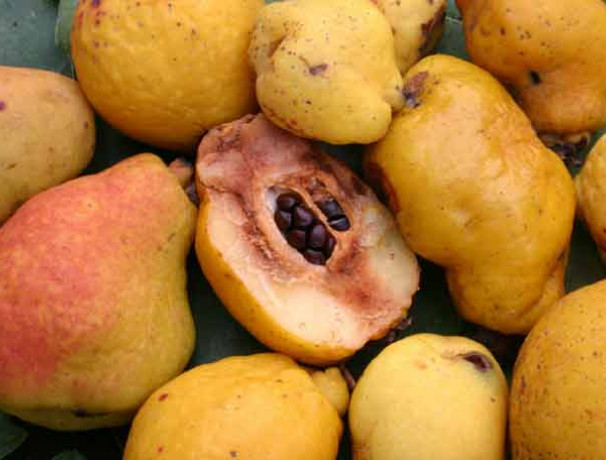
Lemon Flavored Fruit-Super Tart-High in Pectin Almost all quinces produce fruit of some sort. Man..
$260.00