Growing apples from seeds is not as out of control or random as you might think. Several from seed rootstocks were employed only there was no alternative. From seed apples were used for cider or jelly. It wasn’t the grafted variety that people were looking for. Often cultures employed the seed grown fruits like apple for a rootstock or anything that produced fruit for wildlife but without the cost and trials and tribulations of the commercial varieties bred only for human consumption in tightly controlled orchards. When I started my nursery, I immediately began growing apples from seeds. It took a while to figure out which ones were more in tune with my climate. Eventually with the help of other individuals and nurseries I was able to create my own mini-plantings of seedling apples. I then began collecting apple seeds wherever I went asking people if I could rake up their fruit off their lawns. Everyone obliged. For many lawns the fruits were not a welcome addition. I always selected seedlings for clean foliage and fast growth when I grew the trees by the thousands. These two characteristics proved ideal in a no spray world of growing esentially what would known as a jelly fruit. It worked. Today I make these seeds available and you can purchase these selections now. Each seed requires a 90 day dormancy of cold (34-38F) and moisture to germinate. Check out these selections for 2025-26.
Ranetka- Super hardy small green, yellow or red fruited from a cross of Malus x baccata which is the cold hardiest apple in the world able to tolerate minus 50F. This was a selection done using the strongest and most prolific flowering plants. From the northern parts of its range in Alaska and Canada, this is the selection used for rootstock.
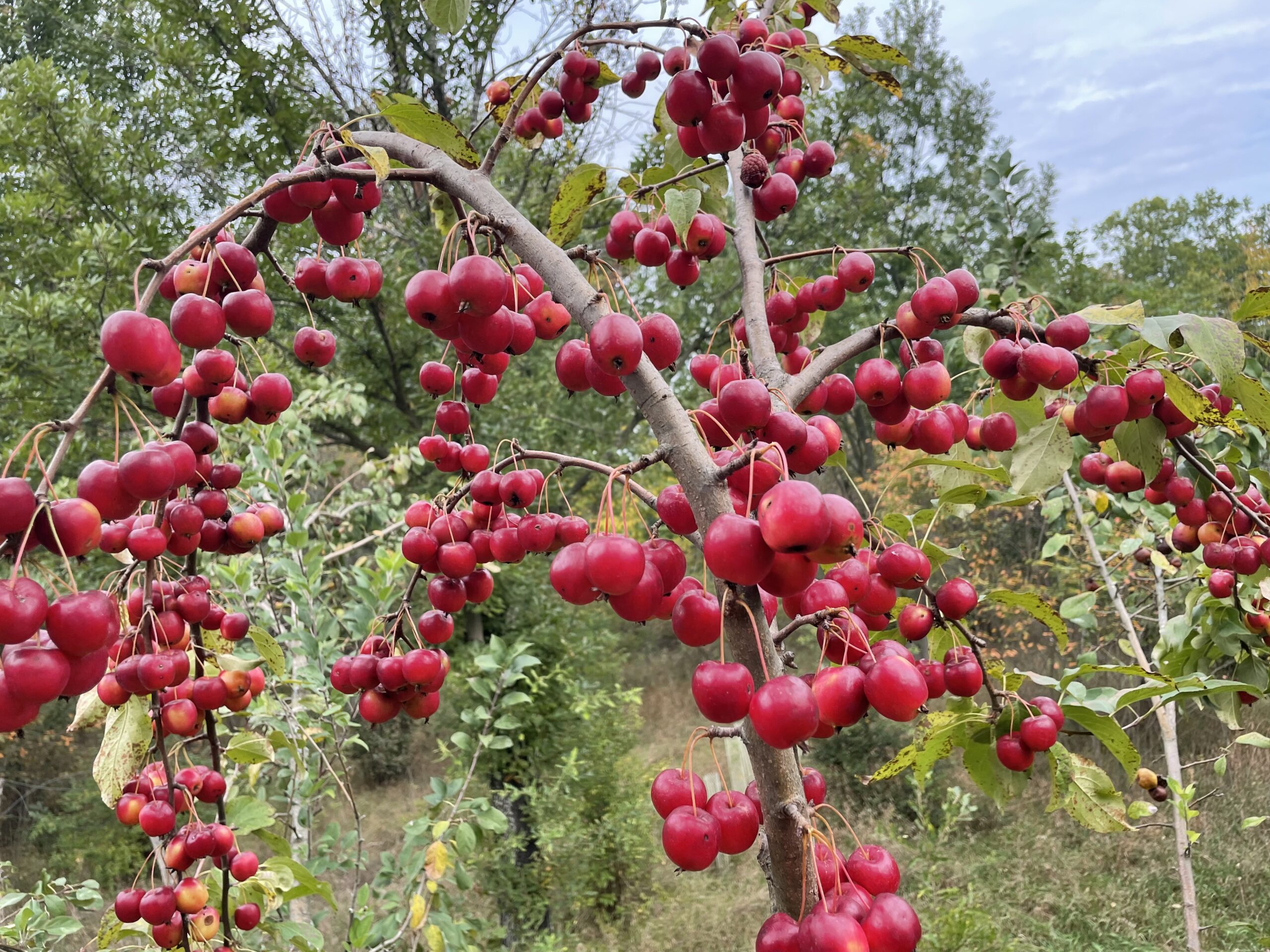
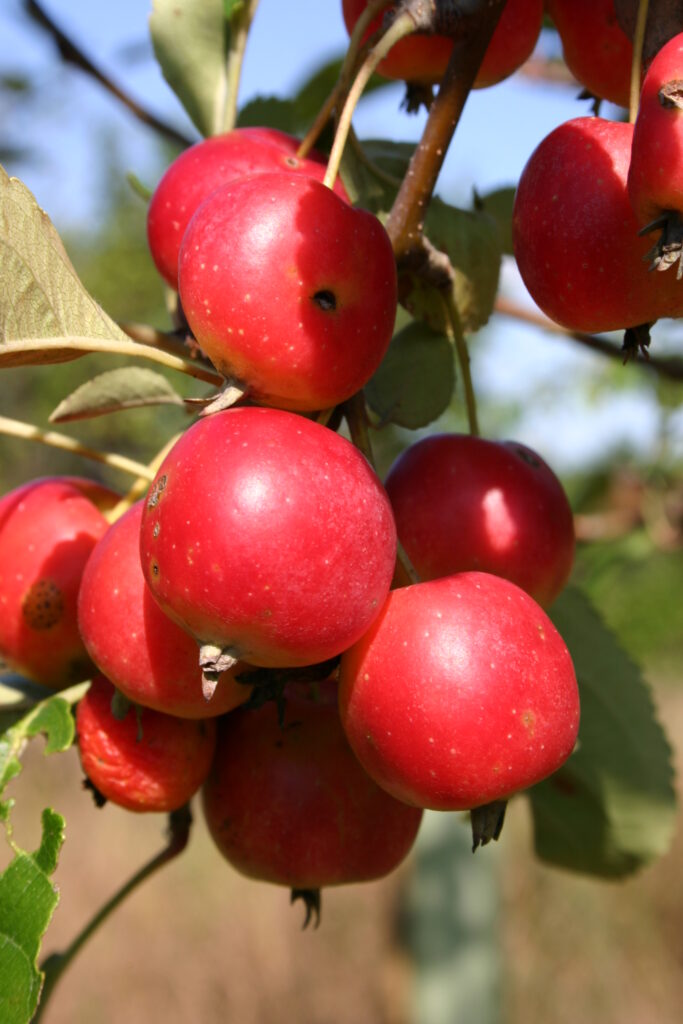
Ecos Red Crabapple– A lot of the crabapple seedlings I grew were weak and needed thinning at the end of a run. I would let them go for at least two years before selling them and another 3-5 years before deciding to plant them in my outback for seed production. Every now and then a pristine and heavy fruiting plant would show up in my plantings. Some of these were the yellow Chinese crabapple types and some were related to Malus x virginiana. This is one of the best with red fruits and super productive. Worth growing to develop further tart apples with insect and disease free fruit and foliage. From pea size to 1/2 inch fruits.
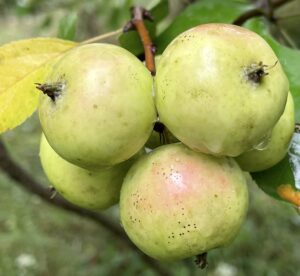
Wild Apple– This years line up includes the ‘Waterfall” apple which is a Malus ioenensis hybrid with domestic apple. Insanely astringent and tart this apple has the typical star shaped fruit and bears like a river flowing over a cliff like a waterfall. Very good cross for developing heavy fruiting crabapples.
Timber Apple -Tree type genotype with strong central leader. Not usually prolific fruiters at my farm with minimal seed set. Selected from several forms that quickly grew straight as an arrow with minimal side branching. Selected specifically for fast growth and clean foliage. Worth trialing more on a larger scale. Limited seeds.
Kerr Applecrab–Selected seedlings from the original Lawyer Nursery plants with clean foliage and fast growth rate. Fruit production is very high with tart almost impossible to eat fresh but highly cherished for jelly. Bright red 1/2 inch clean as a whistle fruits. Selected from the seed source from Minnesota bred Kerr. Scion wood of our selections available upon request with an order of seeds.
Paradise represents one of the strongest and longest lived of the crabapple species Malus pumila. From a Russian seed source, this species really cranks out a red fruited and red interior small red fruit with an actual edible mini apple once fully bletted by the frost and winter weather. It is a favorite of the birds and other small mammals that climb the tree to consume the fruits. It is heavy fruiting and free of insects. Secondary apples show great promise in larger fruit and more robust growth. This is one of my favorite in flower with white dense clusters emerging in early spring. Always has a crop but can go a bit biennial in bearing every now and then with heavy years where the branches hold the crop high in the sky. Proof you don’t need grafted trees always to fulfill your mission of wild apples.